Data Biome

Probiotic innovation for productivity & lower methane.


If we humans are to continue consuming dairy products and meat from cows, sheep and goats or harvesting the wool from sheep,
we will need to deal with the problem of methane released into the atmosphere by their digestion systems.
Data Biome is developing a probiotic for these farmed animals designed to reduce enteric methane emissions and improve productivity.
The probiotic will leverage naturally occurring bacteria to improve fermentation metabolism.

Projects

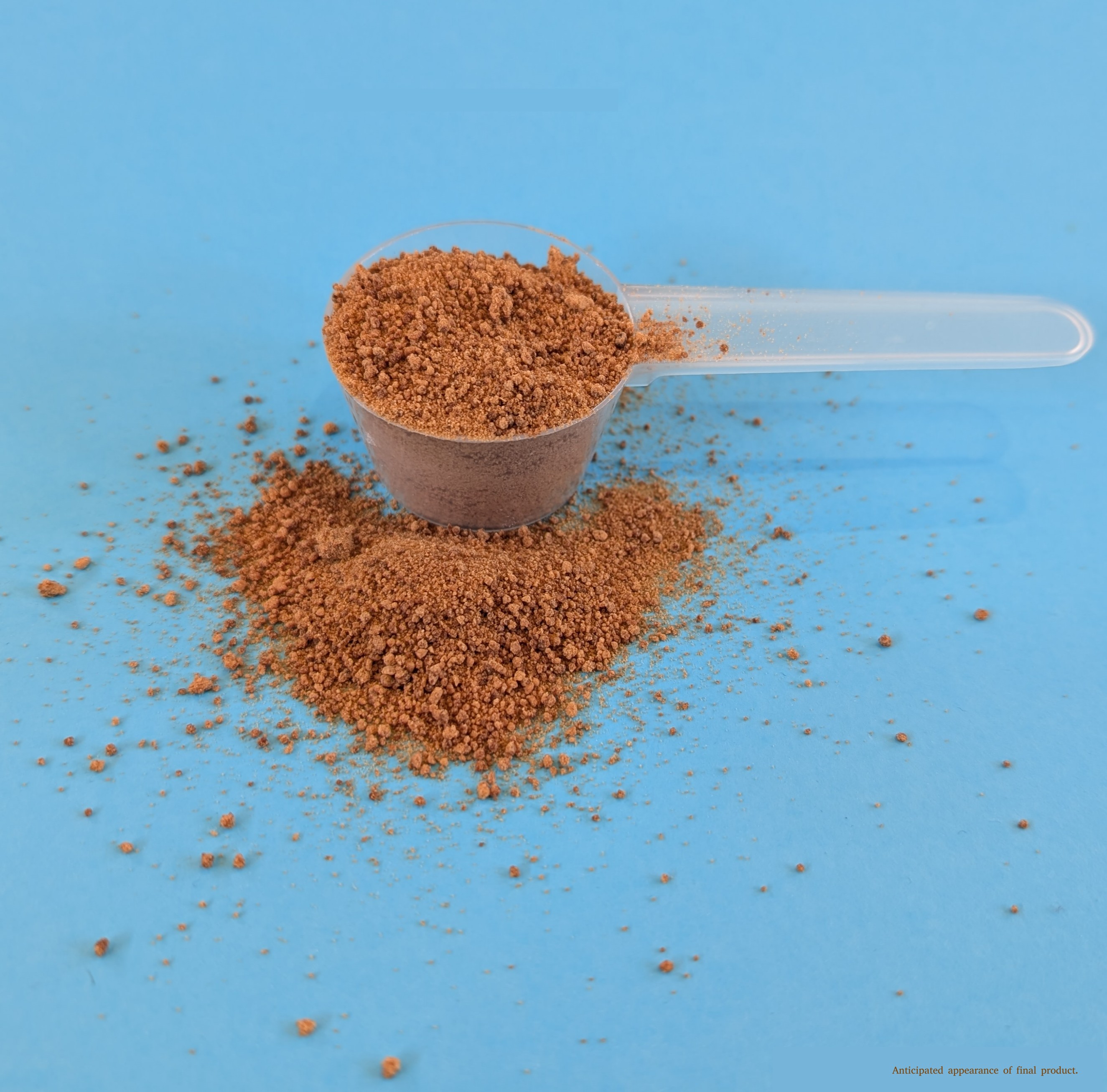
picture of probiotic granulated feed additive

Probiotic for Ruminants

Aim

Data Biome is developing a probiotic feed additive for cows and sheep to divert rumen hydrogen away from the methane waste pathway and into a nutrient production pathway, simultaneously reducing greenhouse gas (methane) production and improving animal productivity.

Strategy

Bacteria are being selected for the probiotic based firstly on an ability to consume hydrogen and thus deplete an essential ingredient for methane production.

Progress

Several bacterial candidates are currently undergoing further metabolic and genomic assessment to determine suitability.
Science

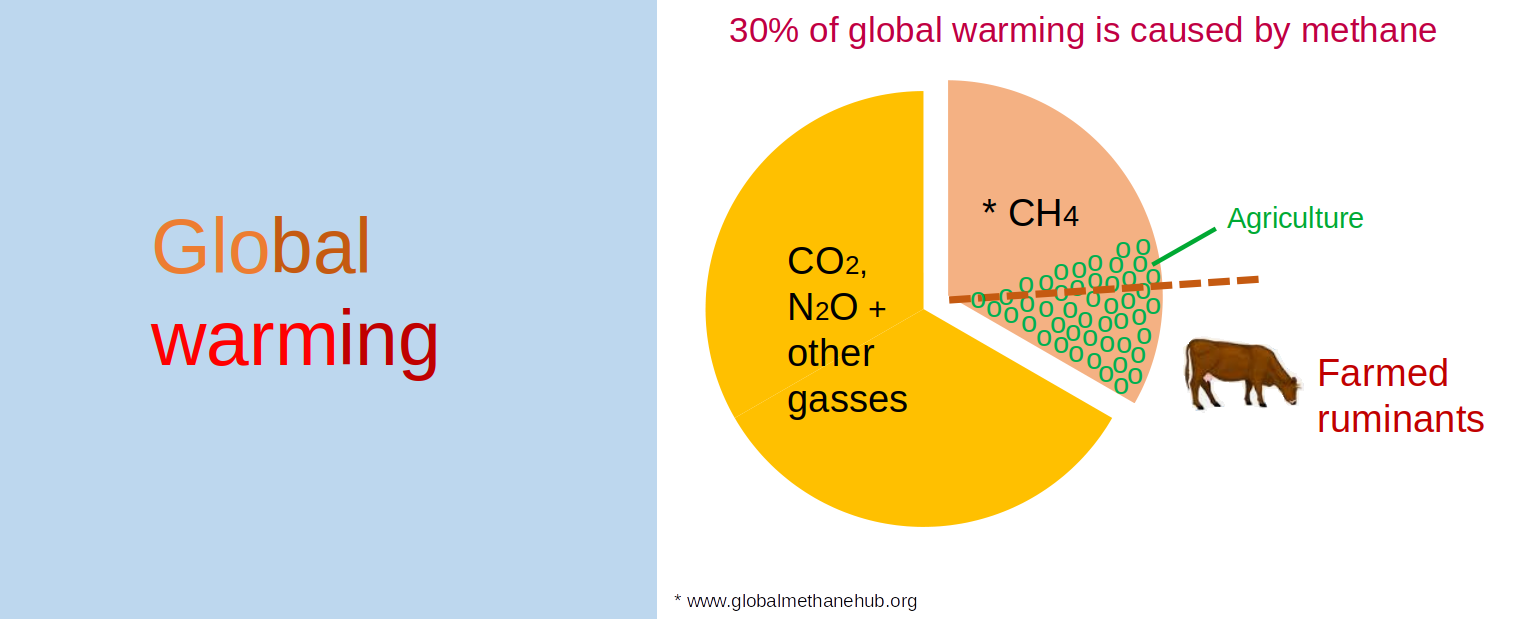
diagram about global warning and methane emission by agriculture and ruminants
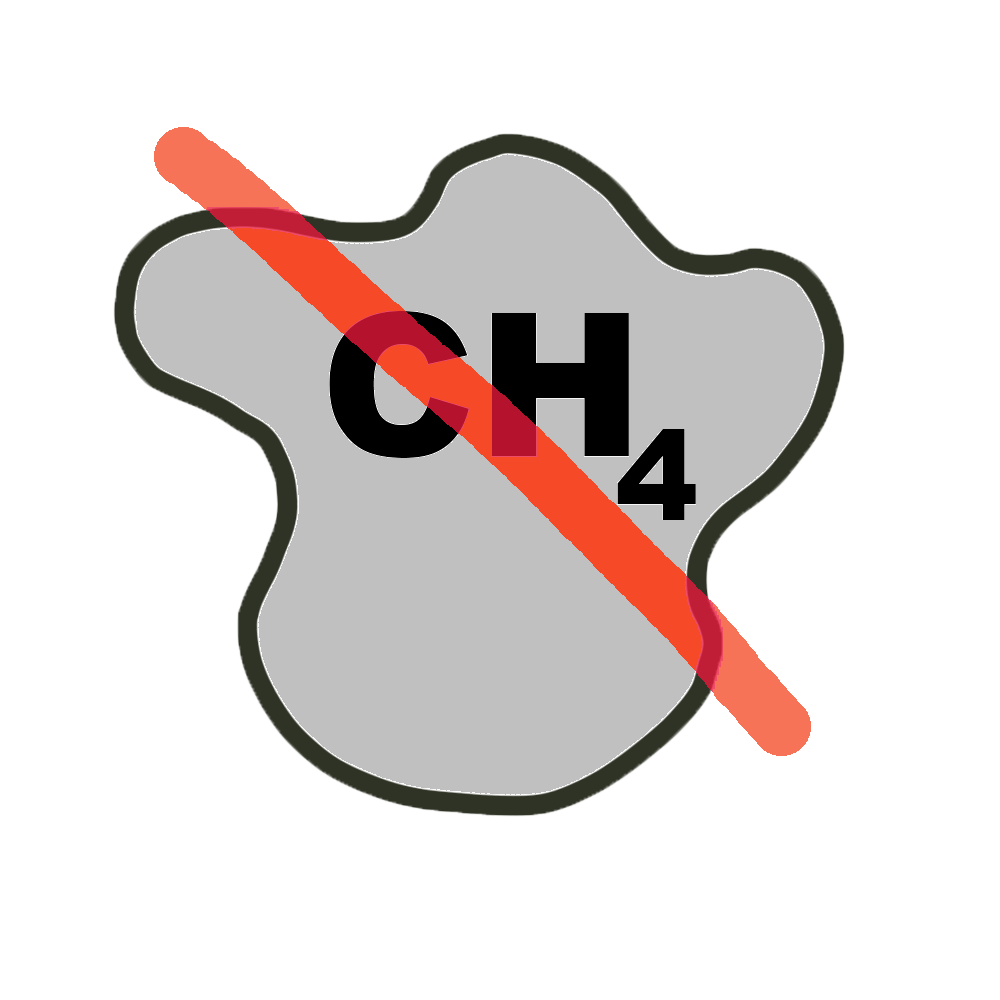
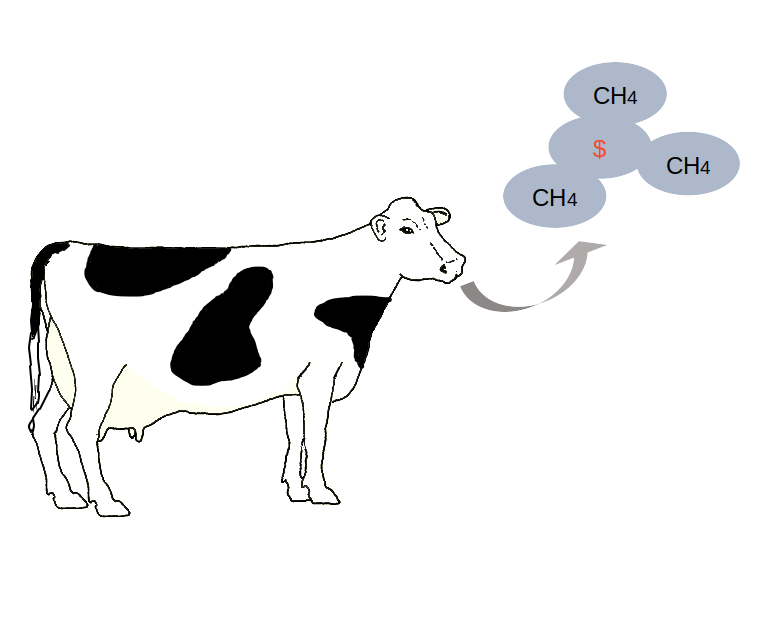
diagram of cow breathing out methane

A 250-cow dairy farm can produce over 35 tonnes of methane per year *.

Methane is produced in the rumen - the first and largest chamber of the ruminant stomach, where ingested grasses and grains are fermented. The methane is a waste product. From the farmer's perspective it represents lost profit as well as an environmental problem. A good description of a cow digestive system can be seen at the U. Minnesota.
The fermentation carried out by hundreds of species of microbes in a cow or sheep rumen generates carbon dioxide and hydrogen as biproducts.
Special microbes, methanogenic archaea, combine carbon dioxide and hydrogen to produce methane. There is a wealth of scientific literature on this subject. For example a paper by Greening et al points out that hydrogen, a critical ingredient, is key to regulating methane production. A paper by Savin et al finds many undescribed bacteria closely linked to low methane production in cows.
Data Biome is trawling through various microbial populations in a search for bacteria with potential to reduce methane production.
* Based on daily methane calculations in Hristov et al, 2015.

diagram of hydrogen consumption pathways

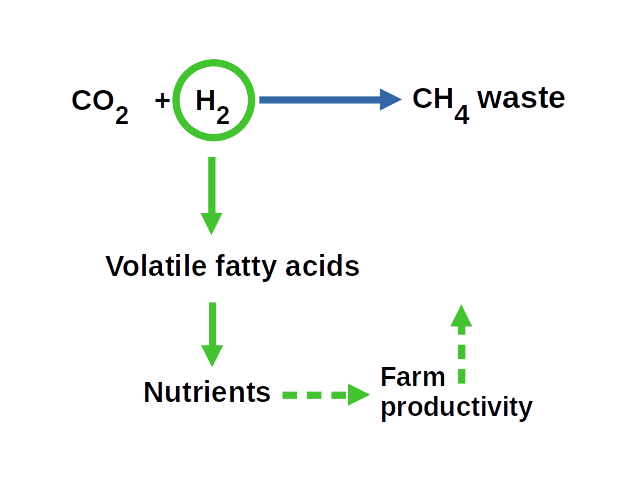
Deplete and redirect a key ingredient.

In the rumen, as part of the fermentation process, methanogenic archaea combine carbon dioxide (CO2) and hydrogen (H2) to form methane (CH4). It is likely that methane production depends very much on the availability and concentration of hydrogen.
This means that if hydrogen becomes limiting, production of methane will decrease. Hence a good strategy to reduce methane production might be to deplete hydrogen by diverting it into a different metabolic pathway, such as producing volatile fatty acids (aka short chain fatty acids).
Data Biome is exploring this strategy by investigating various bacteria able to consume hydrogen in processes that form volatile fatty acids (VFA), leading to improved production of natural nutrients such as amino acids, vitamins and fats, and reduced methane.

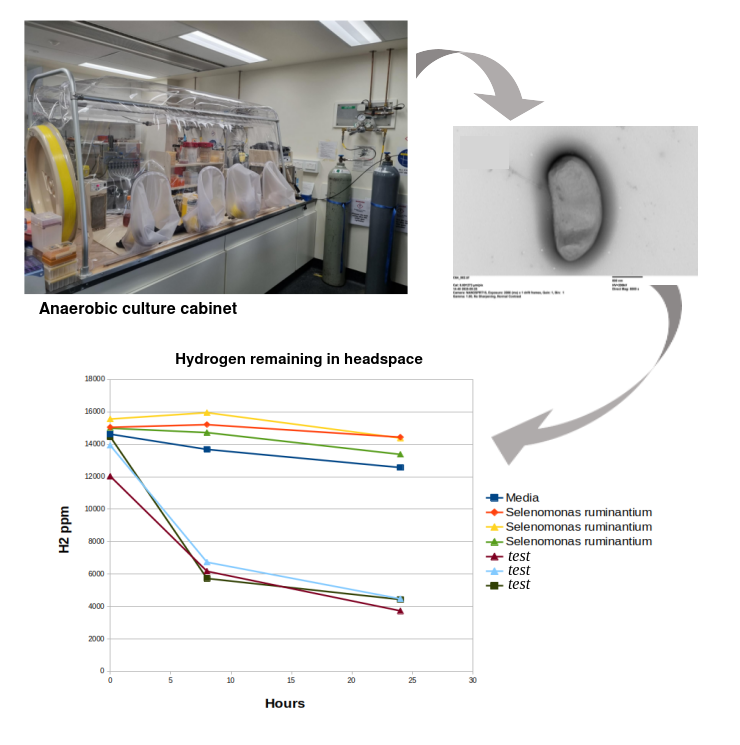
figure showing hydrogen-consuming bacteria, anaerobic chamber, electron micrograph of bacterium, and a plot of headspace hydrogen

A hydrogen eater.

Microbes in animal guts are in general anaerobic. The bacteria isolated by Data Biome must also survive in this environment. That is, their environment must have no oxygen. They must be handled and cultured in a special chamber filled with an atomosphere of nitrogen plus carbon dioxide and hydrogen.
Gas samples taken from the space above a small liquid culture (headspace) and analysed by gas chromatography tell us if gasses are being produced or consumed. The chart indicates that one of our isolates (shown as "test") is consuming hydrogen from the headspace, whereas Selenomonas ruminantium is not. Another 150 or so bacteria remain to be examined but this tells us that hydrogen-consuming bacteria can be isolated and analysed. One isolate, pictured using electron microscopy, is now undergoing more detailed analysis. Others will follow.

The challenge now is to test if such isolates can indeed remove enough hydrogen from a culture of whole rumen fluid so that methane production is restricted by lack of hydrogen. Watch this space!

Data Biome is preparing a provisional patent application.

Partners

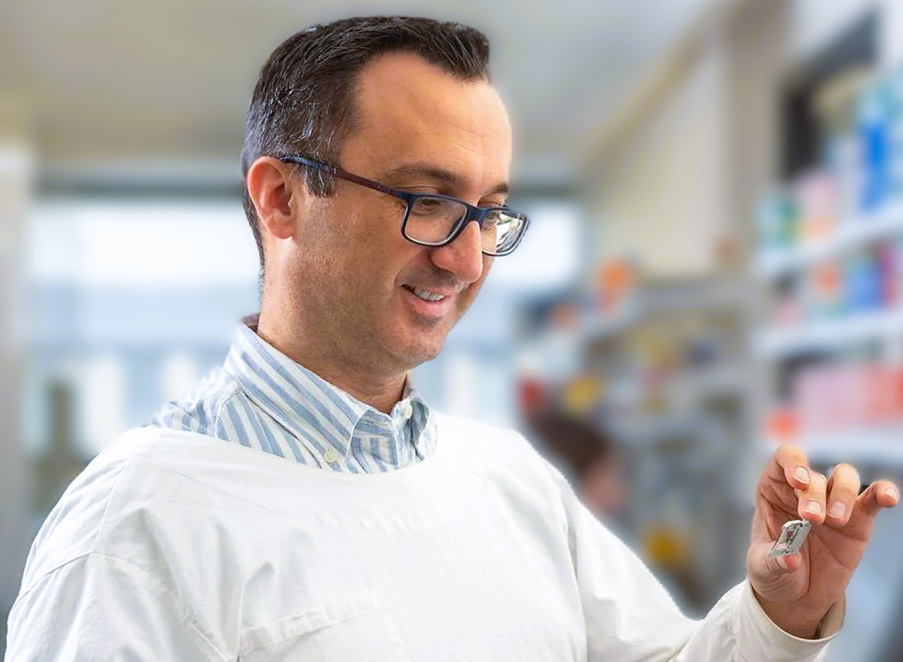
portrait of Professor Steve Petrovski

Professor Steve Petrovski

Microbiologist expert

Steve Petrovski is a microbial geneticist studying how plasmids and transposons spread among bacteria, how microbes can be used as biosensors and how bacteria living in anaerobic environments can be used to solve problems in human health and agriculture.
Steve's team are leveraging their skills, specialised laboratory equipment and experience with anaerobic bacteria to trawl through the hundreds of different bacteria found in an anaerobic environment seeking out those with anti-methane potential.
His lab is located at the Department of Microbiology, Anatomy, Physiology and Pharmacology at LaTrobe University in Melbourne, Australia.

People

portrait of Dr Keith Savin

Dr Keith Savin

Founder and Director of Data Biome Pty Ltd

Keith is a research scientist with more than 30 years hands-on experience in molecular and computational biology in fields from vaccine development to transgenic plants and microbiome data analysis.
He has a BSc (Hons) and PhD from Monash University in Melbourne, Australia.
Keith's scientific publications can be found at Google Scholar.
The most relevant paper is accessible here.
Keith's LinkedIn.

Contact